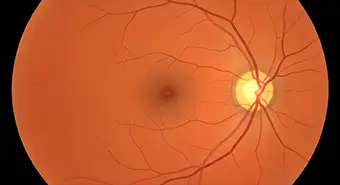
Phase 1
It Begins Quietly
Blur. Glare. You're told it's aging.
The repair signal weakens.
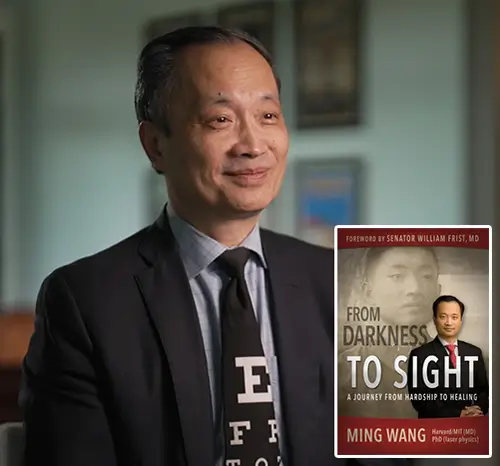
After treating over 21,000 AMD patients, Harvard-trained ophthalmologist Dr. Ming Wang identified a retinal repair pathway most treatments ignore — now known as the Blueberry Method.
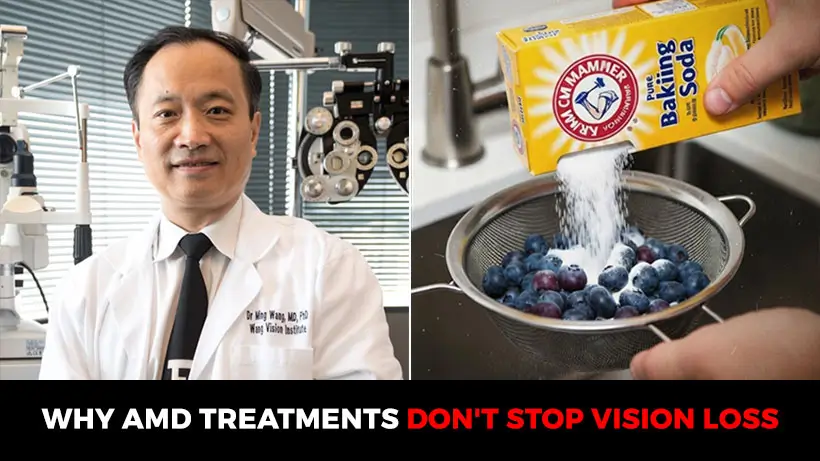
If injections haven't stopped your vision loss — this is why.
21,000 patients. One discovery. Watch before this page comes down.
Age-related macular degeneration doesn't wait.
It advances — even under treatment.
Injections reduce fluid. They do not repair the retina.
You showed up. You endured the injections. You bought the supplements.
And yet —
Reading feels harder. Faces look blurred. Driving at night feels dangerous.
You were told: "There's no cure. We can only slow it down."
What if your treatment was never designed to repair anything?
Inside your retina is a natural repair signal.
Its job is simple: clear damaged cells and maintain clarity.
In age-related macular degeneration, that signal can switch off.
Not destroyed.
Not beyond hope.
Just inactive.
Injections manage fluid. AREDS2 supports nutrition.
Neither reactivates the repair pathway.
And when that signal stays off —
Damage accumulates.
Blur. Glare. You're told it's aging.
The repair signal weakens.
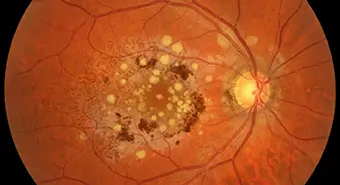
Injections control fluid. But the progression continues.
Repair stays off.
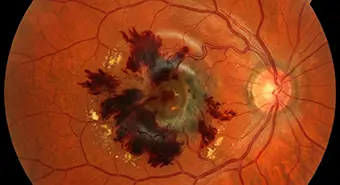
Central vision fades. Retinal cells weaken.
Degeneration continues — even under treatment.
Dr. Wang wasn't looking for a supplement. He was looking for an answer his father deserved.
What he found was hiding in plain sight.
Researchers studying retinal stress identified specific wild blueberry compounds that influence the eye's cellular repair signaling.
That discovery became known as the Blueberry Method.
A biological approach designed to support the repair signal conventional macular degeneration treatment does not target.
When that repair signal is supported, some individuals reported:
Straighter lines. Steadier central vision. And something they hadn't felt in years — the ability to read without fighting for it.
Every other treatment slows the clock. This one tries to restart it.
Dr. Ming Wang has treated over 21,000 AMD patients. But it was his father's diagnosis that changed everything.
Injections slowed fluid — but did not reactivate the retina's repair system.
He watched patient after patient follow the protocol. Show up. Endure the needle. Leave with the same verdict: "We're slowing it down."
Then it became personal.
His own father began losing his sight under the same treatment Dr. Wang was prescribing.
Watching someone you love decline despite doing everything right — that changed everything.
He stopped accepting "slow it down" as the only answer and began investigating the one pathway every conventional treatment was ignoring: the retina's own repair signal.
That research led to what is now known as the Blueberry Method.
“He didn’t even look up from the chart when he said it.
‘There is no cure. Take your vitamins, watch your diet and come back in six months.’
I went to my car and cried.”
Every morning, Sarah needed more light just to read one line of her Bible.
The colors were fading. And every night, the same fear — of one day not being able to see her grandchildren’s faces.
“I prayed just for it to stop getting worse. I didn’t even ask for it to get better. Just to stop.”
Then her daughter sent her a video about the Blueberry Method. She almost didn’t watch it.
Three weeks later, her doctor stared at her scans for a long time.
Then he set them down and said:
“Sarah, I’m not sure how to explain this.”
— Sarah M., 69 • Georgia, USA

Because most treatments are designed to manage symptoms — not reactivate the retina's natural repair pathway.
A research-based biological approach focused on supporting the eye's internal repair signaling — something conventional AMD treatment does not target.
As long as retinal cells remain viable, research suggests repair signaling may still be supported. Inactivity does not always mean irreversible damage.
This approach targets a different biological pathway. Always consult your physician before making changes to your care plan.
Injections manage symptoms. They do not reactivate repair.
Stop the Damage Before It Goes Further — Watch NowThis presentation has already changed how thousands of AMD patients think about their treatment.